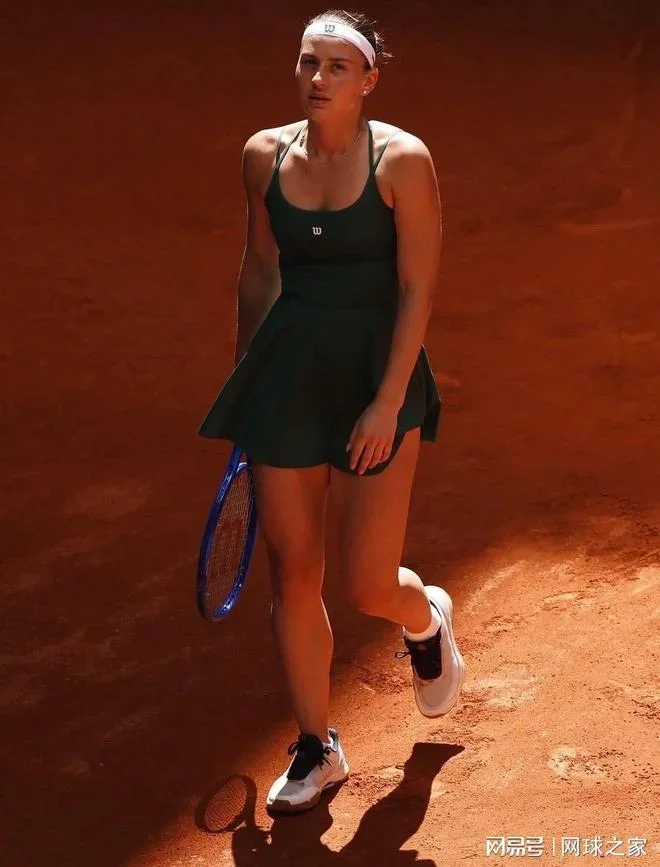

The Madrid women’s singles final delivered a fascinating contrast: one player finally broke through her cocoon, while the other remains in the learning phase. Kostyuk defeated Andreeva 6-3, 7-5 to claim the title. While the result wasn’t entirely unexpected—Kostyuk had just won a tournament the previous week and was in hot form, with her heavy, spinning shots on clay proving highly competitive—the straight-sets victory against Andreeva, who has shown strong form recently, revealed significant insights.
**Winner’s Perspective: Kostyuk’s Butterfly Moment**
From the very first point, Kostyuk displayed a newfound determination. Her serve was aggressive, her baseline forehand was powerful and varied, and her backhand held up under pressure with deep, heavy shots. Crucially, her performance in key moments was exceptional. After breaking serve in the middle of the first set, she gave Andreeva no chance to fight back, holding serve steadily to close out the set. In the second set, Andreeva found her rhythm and even forced two set points late on, but Kostyuk fought her way back with strong serves and aggressive baseline play. This composure was something rarely seen in Kostyuk before.
In the post-match press conference, she said something deeply moving: “At the beginning of this year, I told my team that I had finally let go of the psychological burden of becoming famous at 15. For years, the outside world had high expectations of me, and early fame became a pressure.”
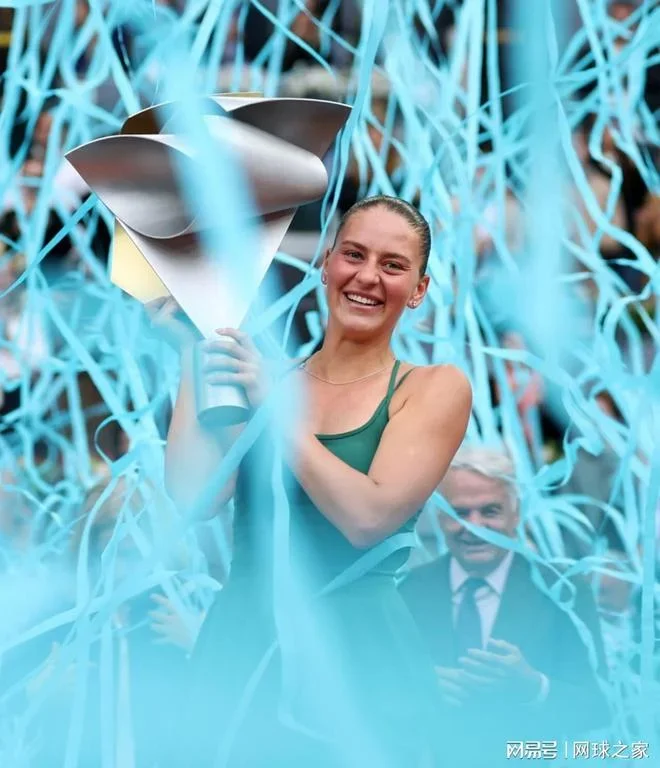
This “finally let go” statement, coming from a 23-year-old, sounds deceptively calm. But knowing the path she traveled since being hailed as a “Ukrainian tennis prodigy” at 15 reveals the immense struggle behind it. At 15, Kostyuk won three qualifying matches to reach the Australian Open main draw, then won her first-round match, becoming the youngest Grand Slam main-draw winner since 2005. Overnight, the spotlight, expectations, and pressure fell on her. Everyone assumed she would become the next superstar. But reality was different: from 15 to 23, she endured countless questions of “when will she fulfill her potential.” Technical refinements, physical development, and mental maturity took time, but the world had no patience for her slow progress. Early fame turned from a gift into a burden.
So when she told her team “I’ve let go,” it was a moment of self-reconciliation. She no longer wanted to play for the “genius girl” label.
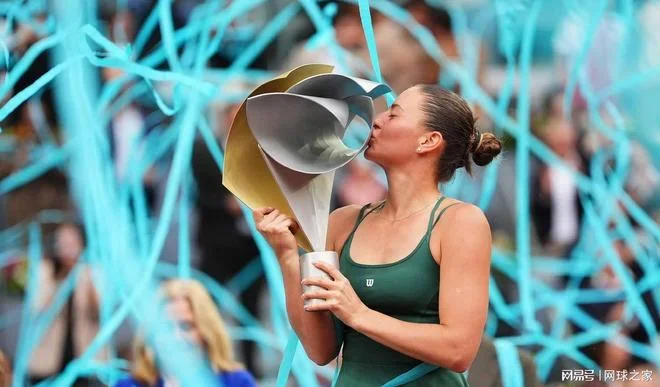
Even more poignant was her mention of her mother. Kostyuk’s mother, Talina, has always been her coach, a notoriously tricky situation in tennis. Parent-coach dynamics are fraught with tension: are you the coach or the parent during training? Do you offer comfort or analysis after a loss? Can you switch between “family member” and “coach” in daily life? Many talented players have stumbled in this relationship, some switching coaches or even parting ways with parents. Kostyuk’s statement—”Many players have rocky relationships with their parent-coaches, but I’m glad I got through it”—shows she and her mother endured tough times. But she overcame them, and the reward is clear: a short training camp with her mother before the clay season resulted in back-to-back titles.
Kostyuk added, “I’m very grateful for her efforts in these months. Even now, after winning a WTA 1000 title, my original intention remains unchanged. I’ll keep working hard and enjoy the tennis journey, because the process is always more important than the result.”
This sense of ease and relaxation may have been a key factor in her victory.
**Loser’s Perspective: Andreeva’s Bitter Lesson**
Now, let’s look at the losing side. Andreeva’s post-match comments were heartbreakingly honest:
“Every time I lose, it feels like the end of the world to me. I don’t know. Sometimes I see other players smiling immediately after a loss, and I don’t understand how they do it. I wish I could. For me, every loss is very disappointing and painful.”
This raw honesty is touching, but it also reveals a major issue. Calling a tour final loss “the end of the world” is a heavy burden. If she feels this way now, what happens when she loses a Grand Slam final or a tiebreak in a semifinal? The higher you climb, the more painful each loss becomes. If she already equates loss with the apocalypse, that emotional baggage will only grow.
Andreeva recognizes this: “I hope I can do better in the future, maybe immediately face the loss calmly instead of needing a long time to start talking about it.”
This self-awareness is valuable, showing she knows the problem and wants to change. But the gap between knowing and doing is vast. Kostyuk took eight years to move from “can’t let go” to “let go.” Andreeva, at just 19, still has a long journey ahead.
However, one thing must be credited: she didn’t collapse after the singles final. She said, “The tournament isn’t over yet. I’ll give my all in the doubles.” Saying it feels like the end of the world but still picking up her racket for doubles shows a resilience that can help her bounce back. She doesn’t need to avoid pain—that’s unrealistic—but the key is standing up after the pain. Her immediate focus on the doubles match suggests she has the grit to learn to coexist with defeat.
**Andreeva’s Technical Flaws**
Beyond the mental aspect, the match exposed a persistent technical issue for Andreeva. Her foundation is excellent for her age: superb physical conditioning, great movement, and solid power with a broad, stable core. These assets should lead her to a baseline game of aggressive power, overwhelming opponents with heavy shots. But under coach Martinez’s guidance, Andreeva’s style has become highly varied: drop shots, sudden line changes, net approaches, and altering pace. These tools are individually fine, but they need a unifying element: control over the match. She must know when to vary,